
Research answer
What AppTrendKit can say about Brainf*ck today
Brainf*ck has no estimate-backed download or gross-consumer-spend figure that meets the public evidence contract yet.
Observed App Store metadata, chart positions, and history are shown below. Missing, non-finite, undefined-currency, or undefined-metric evidence stays missing rather than becoming zero.
Performance intelligence
Observed trajectory and estimates
Store ranks are observations. Downloads and gross store consumer spend are AppTrendKit estimates and only appear when persisted evidence exists.
Estimated downloads · 30D
ModeledNo persisted estimate
The page does not turn missing evidence into zero.
Estimated App Store gross consumer spend · 30D
ModeledNo persisted estimate
The page does not turn missing evidence into zero.
Estimated downloads · 7D
ModeledNo persisted estimate
The page does not turn missing evidence into zero.
Estimated App Store gross consumer spend · 7D
ModeledNo persisted estimate
The page does not turn missing evidence into zero.
Evidence history
Collected daily performance
No daily metric history has been persisted yet.
Rank history
Observed chart positions
Lower rank is better. Only collected observations are shown.
Coverage note
What the ranks mean
A missing rank is not treated as zero downloads or zero revenue. Apple chart feeds are bounded and may return censored or not-ranked observations outside the visible chart depth.
Read the methodStorefront mix
Top countries by estimated contribution
Country estimates are aggregated only after country-level predictions exist.
Monetization
Observed store economics signals
These are listing and product observations. They are not company revenue, subscriber counts, or advertising revenue.
App details
Store metadata
- Version
- 2.5
- Released
- Jan 13, 2012
- Last updated
- Jul 17, 2021
- Content rating
- 12+
- Default storefront
- CO
Public IAP observations
Validated in-app purchase prices
Only persisted rows with an explicit public publication boundary are shown. Missing price, currency, country, or date values stay unknown.
Listing detail
What the store says
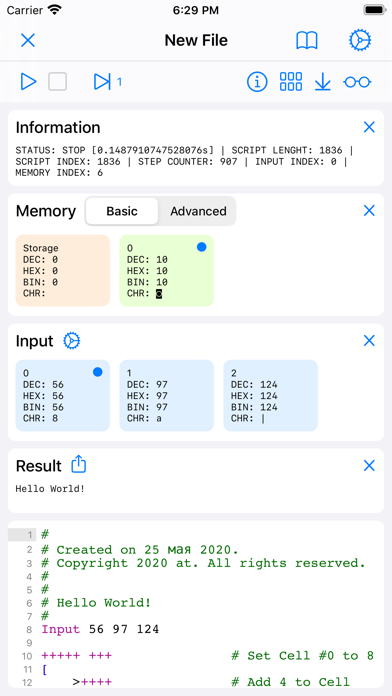
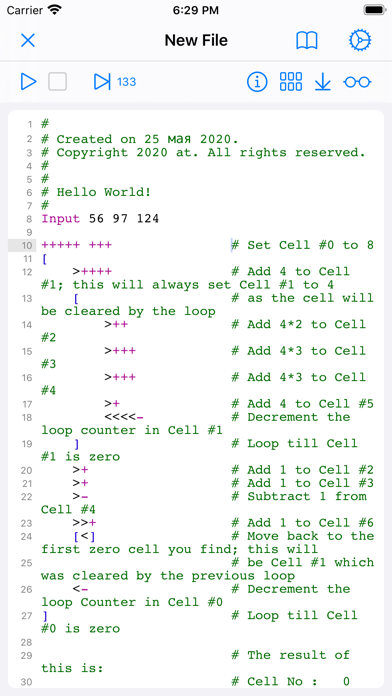
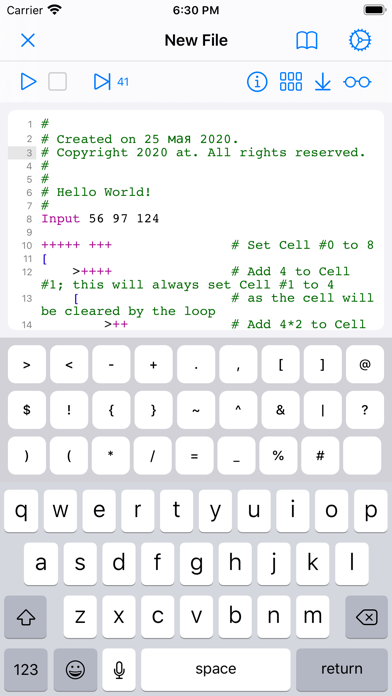
Brain***k IDE is an esoteric programming language created in 1993 by Urban Müller, and is notable for its extreme minimalism. The language consists of only eight simple commands and an instruction pointer. While it is fully Turing complete, it is not intended for practical use, but to challenge and amuse programmers. Brain***k simply requires one to break commands into microscopic steps. The language's name is a reference to the slang term Brain***k, which refers to things so complicated or unusual that they exceed the limits of one's understanding. History In 1992, Urban Müller, a Swiss physics student, took over a small online archive for Amiga software. The archive grew more popular, and was soon mirrored around the world. Today, it is the world's largest Amiga archive, known as Aminet. Müller designed Brain***k with the goal of implementing it with the smallest possible compiler, inspired by the 1024-byte compiler for the FALSE programming language. Müller's original compiler was implemented in machine language and compiled to a binary with a size of 296 bytes. He uploaded the first Brain***k compiler to Aminet in 1993. The program came with a "Readme" file, which briefly described the language, and challenged the reader "Who can program anything useful with it? :)". Müller also included an interpreter and some quite elaborate examples. A second version of the compiler used only 240 bytes. As Aminet grew, the compiler became popular among the Amiga community, and in time it was implemented for other platforms. Several Brainf*ck compilers have been made smaller than 200 bytes, and one is only 100 bytes. Language design The language consists of eight commands, listed below. A Brain***k program is a sequence of these commands, possibly interspersed with other characters (which are ignored). The commands are executed sequentially, with some exceptions: an instruction pointer begins at the first command, and each command it points to is executed, after which it normally moves forward to the next command. The program terminates when the instruction pointer moves past the last command. The Brain***k language uses a simple machine model consisting of the program and instruction pointer, as well as an array of at least 30,000 byte cells initialized to zero; a movable data pointer (initialized to point to the leftmost byte of the array); and two streams of bytes for input and output (most often connected to a keyboard and a monitor respectively, and using the ASCII character encoding). Privacy policy: https://static.macflash.ru/PRIVACY_POLICY_EN Terms of use: https://static.macflash.ru/TERMS_OF_USE_EN
Publisher websiteStore creative
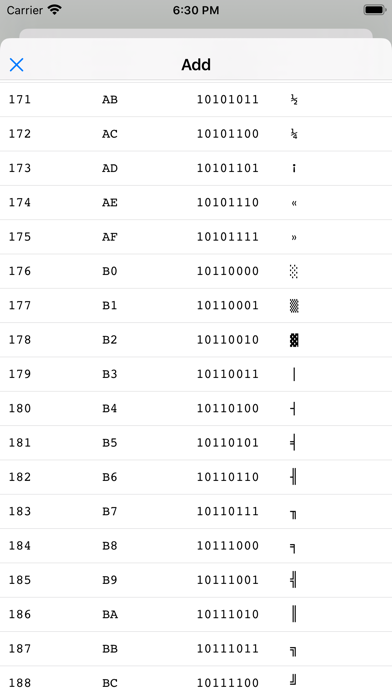
Screenshots
Competitive set
Similar apps
Deterministic links to real stored apps matched by category, publisher, and comparable performance bands.

'Proto' for Figma
Florian Windbacher

a-Shell
Nicolas Holzschuch

app Developer 软件开发助手
Adina Interactive Technology Co., Ltd.

App Store Connect
Apple Distribution International

Appboard: App Store Rankings
Dongchan Son

avoGate
Lark Company Limited

Bluetooth Controller BT/LE
Alper Vural

Bluetooth Debugger & Inspector
艳 王
Methodology and provenance
Read every number with its evidence
Metadata source: Apple iTunes Search API; observed Sep 7, 2026, 10:40 PM.
Rankings: collected chart positions from the listed storefront. Missing ranks are not zeros.
Economics: downloads and gross store consumer spend are estimated, not official Apple or publisher figures.
Model: No persisted model version.
Confidence: —; intervals widen when evidence or history is limited.
Last observation: Sep 7, 2026, 10:40 PM.
See how AppTrendKit separates observations, estimates, coverage, and confidence.
Open methodology